Tamesa
Meaning of Tamesa
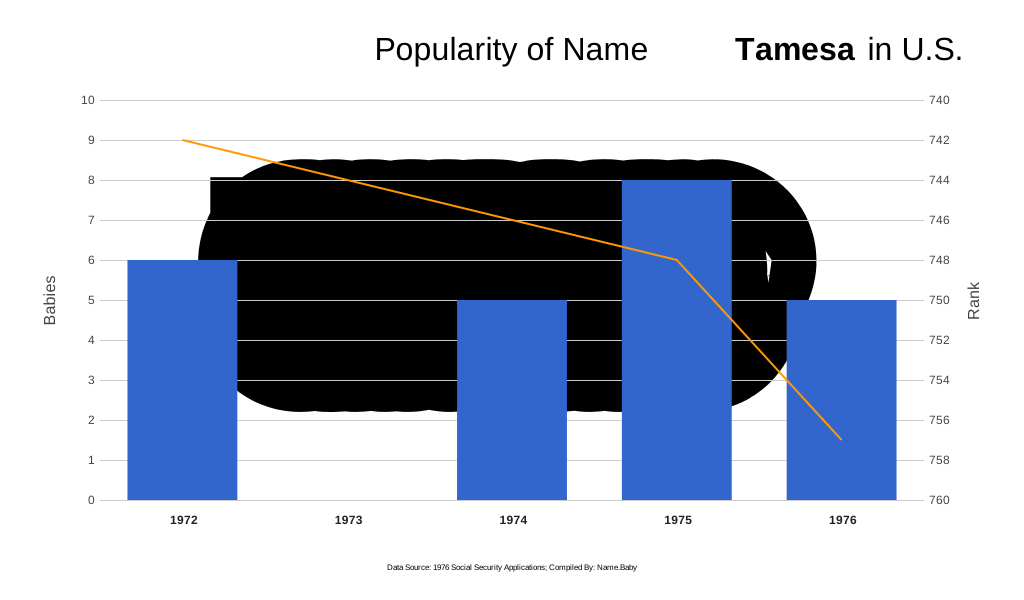
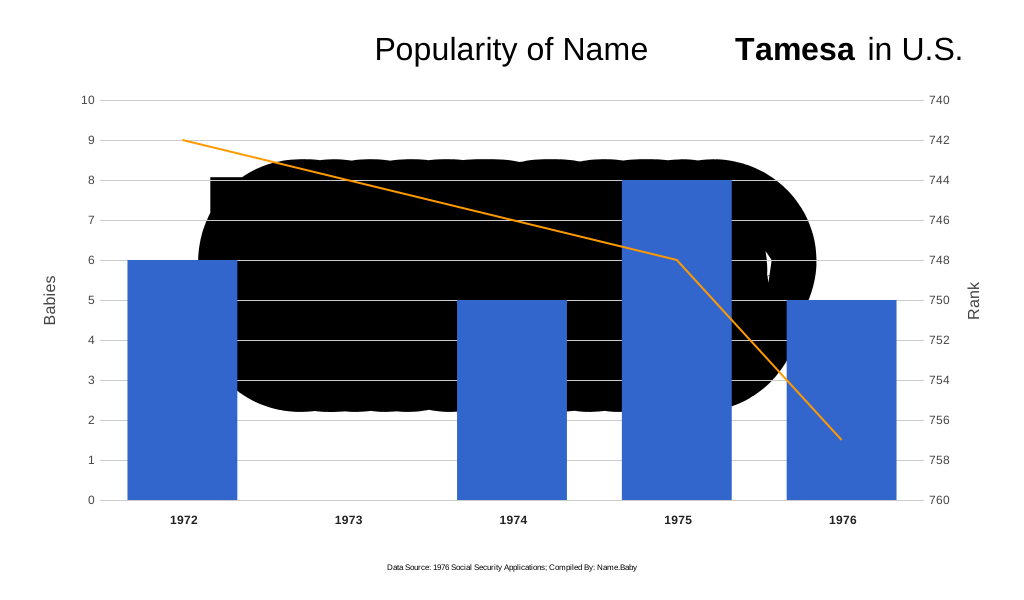
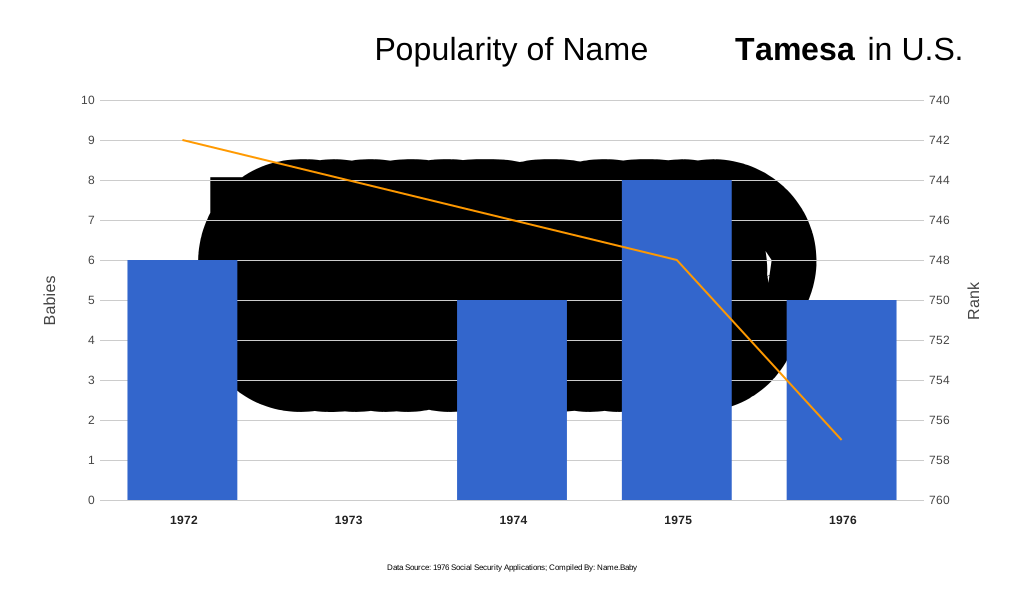
The name Tamesa, recorded just five to eight times annually in the United States between 1972 and 1976, represents a thoughtful modern twist on the venerable Greek Theresa—whose root therizein means “to harvest.” With its softly rolling consonants and the lyrical “-sa” ending, Tamesa evokes sun-drenched fields and an undercurrent of steadfast warmth, marrying classical resonance with a fresh, inventive spirit. Although it never threatened the top-100 charts—its Social Security rank languishing in the mid-700s—it nonetheless flickered into enough birth certificates to pique the curiosity of naming scholars and amuse census takers. In its balanced symmetry and subtle sophistication, one senses an unspoken confidence, as if the bearer is destined to cultivate both compassion and quiet strength. Today, Tamesa stands as a testament to Anglo-American creativity in naming: a rare bloom in the garden of feminine appellations, at once familiar and refreshingly singular.
Pronunciation
English
- Pronunced as tuh-MEE-suh (/təˈmiːsə/)
U.S. Popularity Chart