Taria
Meaning of Taria
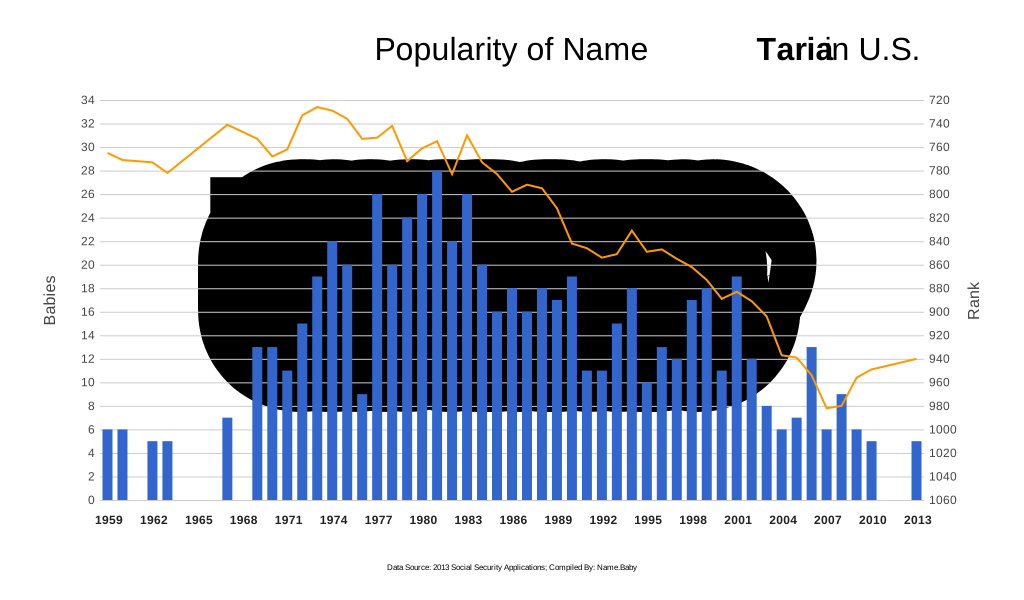
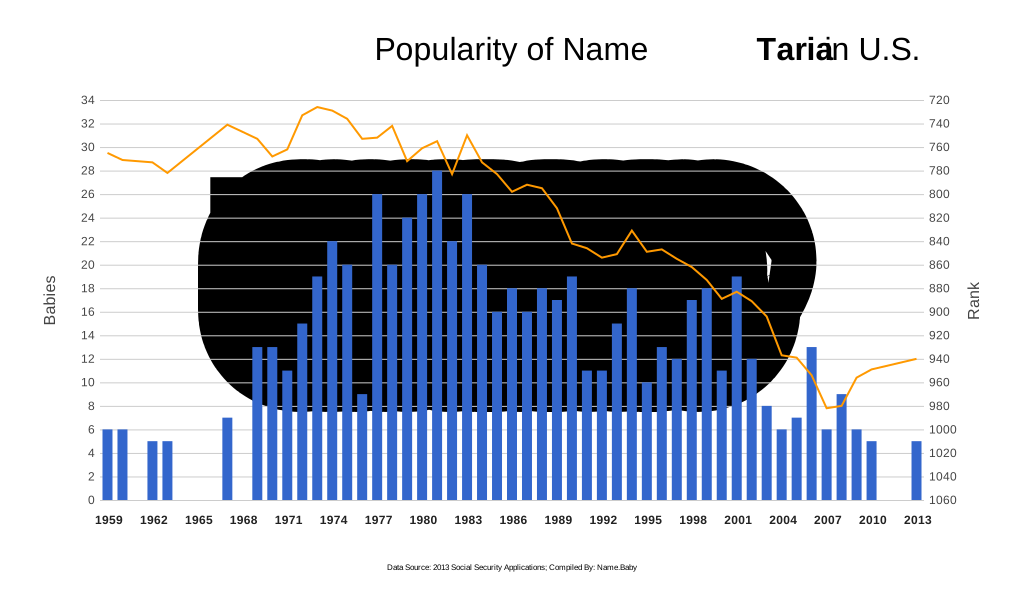
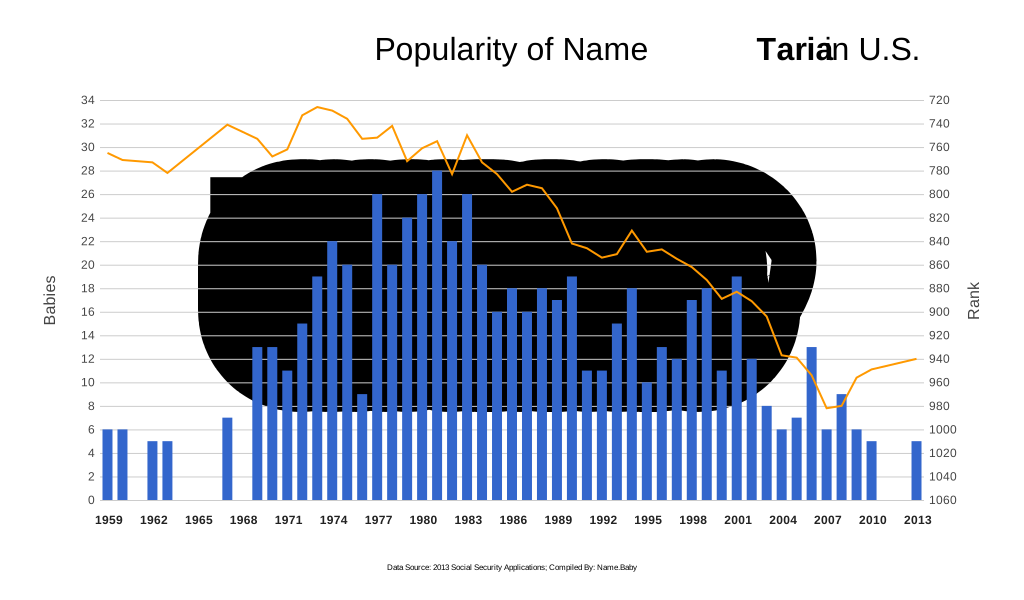
Taria, a unisex name pronounced /tɑːˈriːə/, emerges in Anglo-American onomastics as a phonetically balanced appellation with contested etymology—some scholars trace it to the Persian Daria, signifying “possessing goodness,” while others derive it from the Welsh tarian, meaning “shield”—thereby ascribing to it both benevolent and protective semantic dimensions. Analysis of United States Social Security Administration records indicates that Taria has registered minimal but persistent incidence among newborns since the late 1950s, with annual occurrences never exceeding thirty and a ranking that has consistently fallen outside the top 700, peaking modestly in the early 1980s and again in the 2000s. Its trochaic structure, characterized by an initial open back vowel followed by an alveolar approximant and a long close-front vowel, aligns with contemporary naming trends that privilege brevity, sonority and phonological coherence. From a sociolinguistic perspective, Taria’s sustained low-frequency profile underscores its appeal to parents seeking a distinctive yet structurally conventional name that embodies classical resonance within a modern unisex framework.
Pronunciation
English
- Pronunced as TAH-ree-uh (/tɑːˈriːə/)
U.S. Popularity Chart