Thornton
Meaning of Thornton
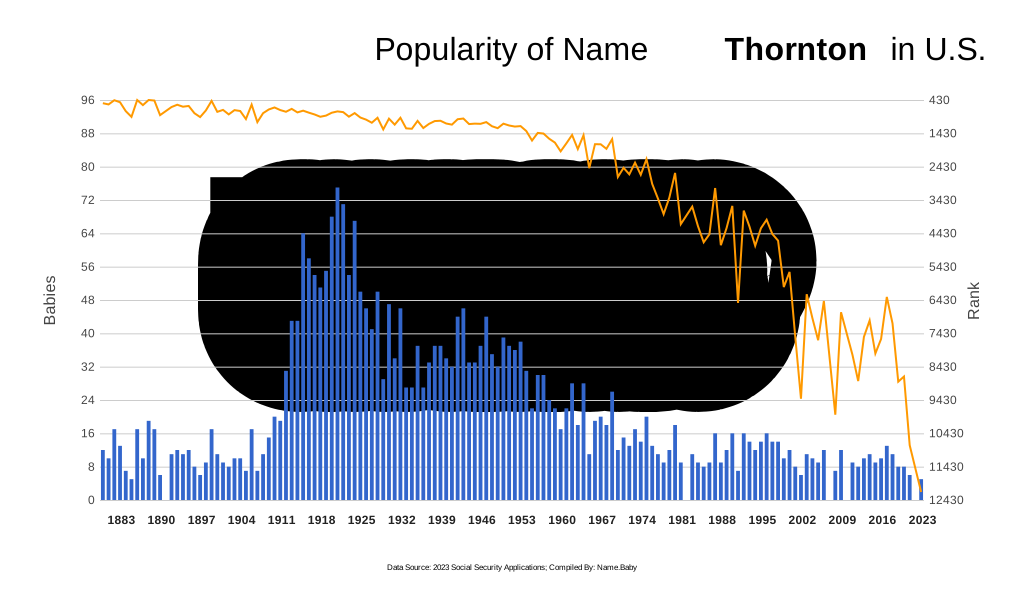
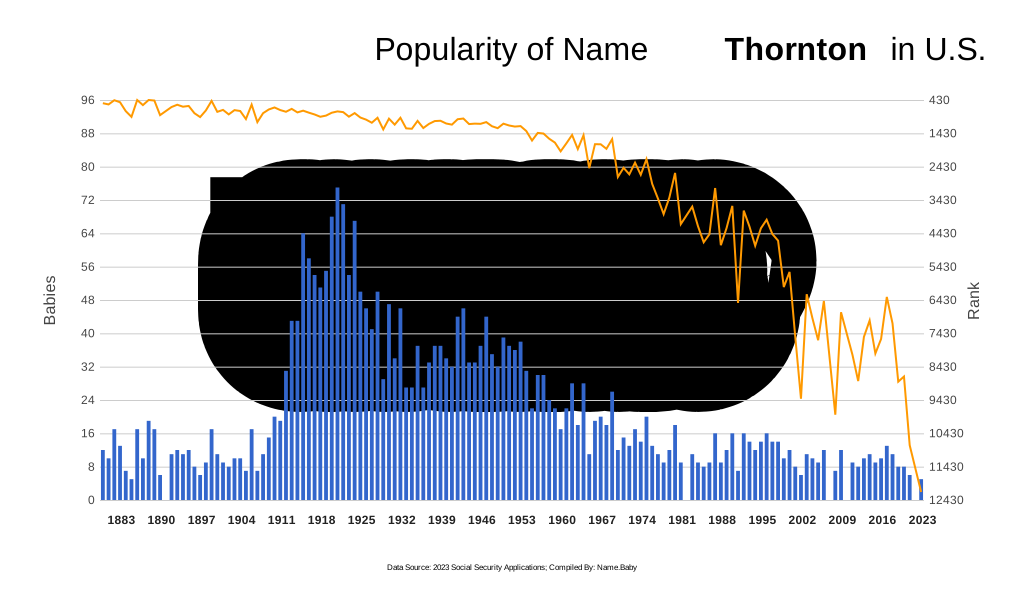
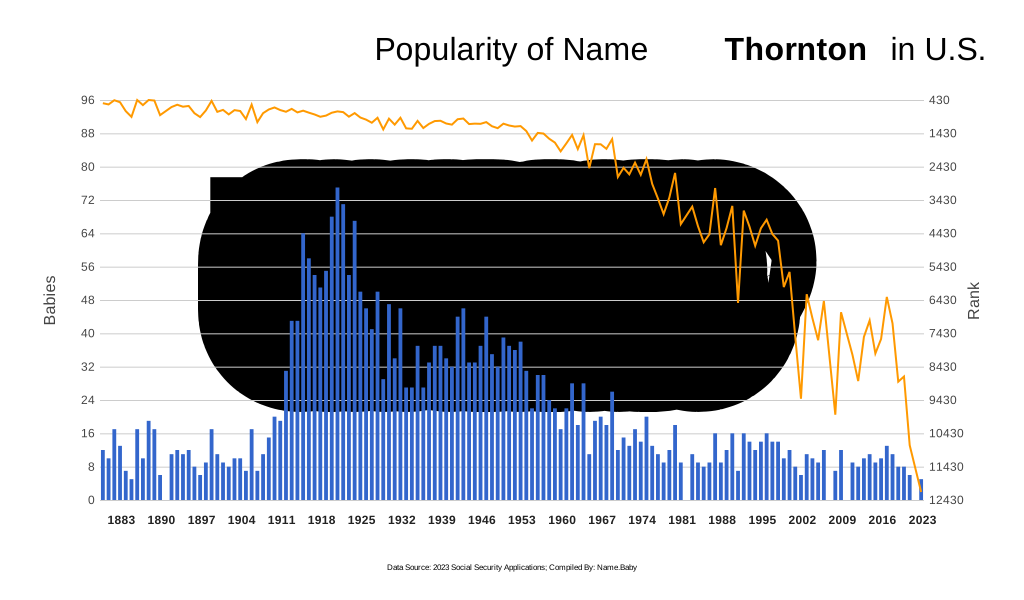
Thornton, pronounced THOR-tun (/ˈθɔr.tən/), traces its origin to Old English, combining thorn (þorn) and tun (settlement) to denote an enclosure marked by thorn bushes and originally identifying inhabitants of English villages bearing the name. In Anglo-American usage it shifted from a locational surname to a masculine given name, often selected to signal ancestral ties or an affinity for historic toponymic labels. Notable figures like playwright Thornton Wilder reinforce its literary resonance, while contemporary U.S. data record just six newborns named Thornton in 2024—ranked 918th—indicating both stability and rarity: its modest frequency makes it unlikely that two Thorntons will share a kindergarten class. This analytical profile and measured distinctiveness cater to parents seeking a designation with clear etymological roots and restrained character.
Pronunciation
English
- Pronunced as THOR-tun (/ˈθɔr.tən/)
U.S. Popularity Chart
Notable People Named Thornton
| Thornton Wilder was an American novelist and playwright who won three Pulitzer Prizes for works including Our Town and The Bridge of San Luis Rey. |
| Thornton Waldo Burgess was an American conservationist and children's author who wrote over 170 books and 15,000 newspaper stories. |
| Thornton Blackburn was a freedom seeker whose landmark case helped establish Canada as a safe haven for people escaping slavery. |
| Thornton Fleming Brodhead served as a brevet brigadier general during the American Civil War. |
