Treyton
Meaning of Treyton
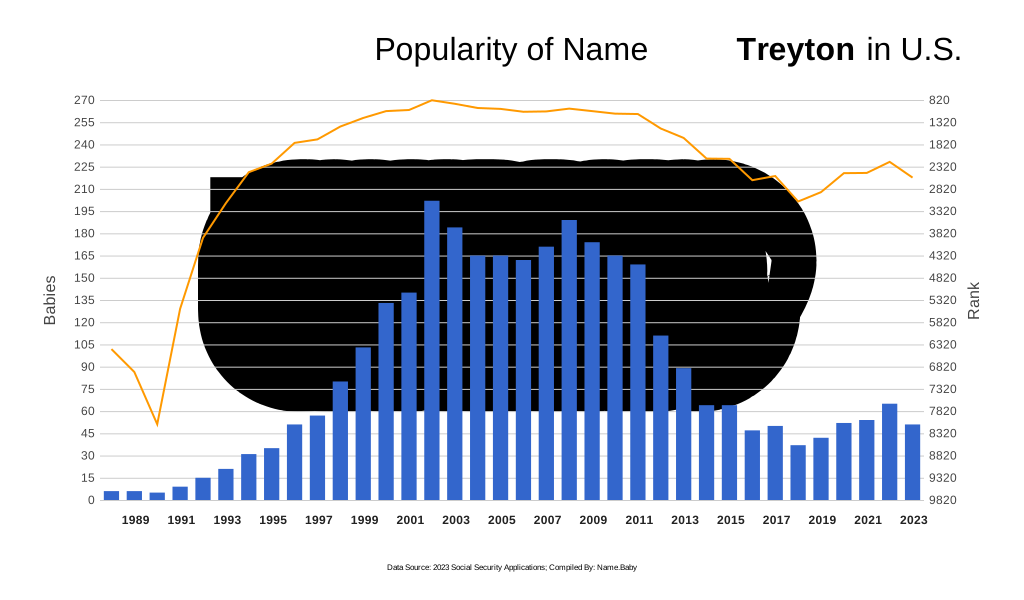
In its morphological essence, Treyton emerges as a neoclassical elaboration of the succinct “Trey”—itself derived from the Old French treis, a linguistic descendant of Latin tres, the numeral three—imbuing the name with the symbolic resonance of tripartite harmony so revered in Roman architectural and philosophical traditions. Scholars of onomastics note that such a formation exemplifies the modern American penchant for augmenting monosyllabic roots with the Latinate suffix “-ton,” connoting both a sense of solid foundation and a nod to ancient topographical nomenclature. Metaphorically akin to the three supporting pillars of a classical villa or the triadic cadence of a Latin oration—invoking order, balance, and a promise of strength—Treyton exudes a dignified warmth, bridging the gravitas of antiquity with contemporary individuality. Although it has remained relatively uncommon among male given names, its prevalence has oscillated since its emergence in the late 1980s, peaking in the early 2000s before stabilizing in the lower echelons of national rankings; in 2024, twenty-four American newborns bore the name, placing it at position 900. This trajectory underscores its appeal as a distinctive yet accessible choice for parents seeking a name that resonates with classical erudition and modern sensibilities. Within the tapestry of Latin-influenced American naming conventions, Treyton stands as a testament to the enduring allure of triadic symbolism and the scholarly interplay between linguistic heritage and personal identity.
Pronunciation
English
- Pronunced as TRAY-tun (/treɪˈtən/)
U.S. Popularity Chart
Notable People Named Treyton
| Treyton Welch - |
