Ubaid
Meaning of Ubaid
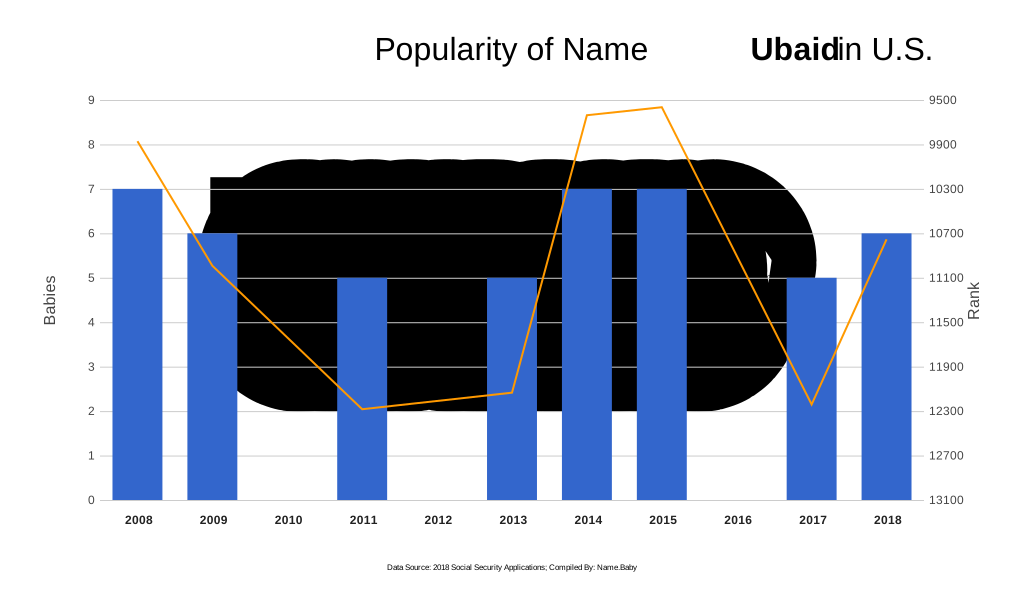
Originating in Classical Arabic, the masculine name Ubaid functions as a diminutive of ʿAbd (“servant”), thereby conveying the literal sense of “little servant” and embodying qualities of humility and devoutness within Islamic onomastics. Rendered in English as oo-BAYD (/uˈbeɪd/), the name’s phonological simplicity facilitates its adoption across linguistic contexts while preserving its etymological integrity. Historically, Ubaid has been borne by notable figures in early Islamic scholarship and governance and even lends its name to the prehistoric Mesopotamian Ubaid period, underscoring an ancient cultural substratum. In the United States, federal birth‐registration data from 2008 to 2018 record between five and seven newborns named Ubaid each year, with national rankings oscillating between 877 and 911—statistics that reflect a consistent yet modest preference among parents seeking a name that marries spiritual fidelity with transregional heritage.
Pronunciation
- Pronunced as oo-BAYD (/uˈbeɪd/)
U.S. Popularity Chart
Similar Names to Ubaid
Notable People Named Ubaid
| Ubaid C. K. - |
| Ubaid Ullah Mayar - |
