Uno
Meaning of Uno
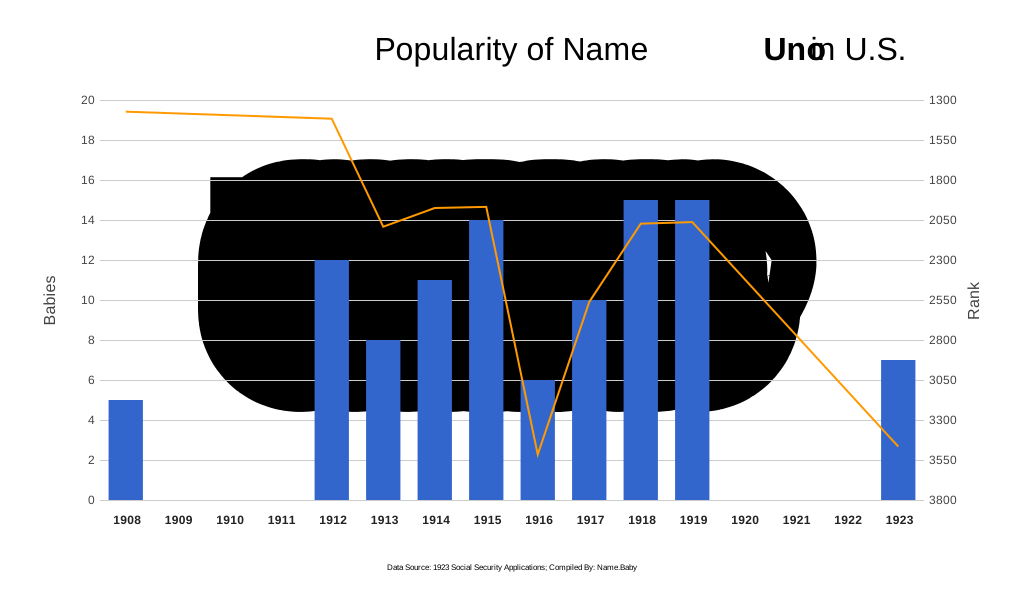
Uno springs from Latin unus, the root that became the Spanish and Italian word for “one,” a built-in statement of singularity and leadership. U.S. birth records show the name flickering between 1908 and 1923—never topping fifteen boys in a year—so it keeps the patina of rarity. Outside the nursery rolls, Uno surfaces in daily life as the brisk card game launched in 1971 and, in diplomatic shorthand, as the acronym for the United Nations, modern layers that sit lightly on its classical core. In Spanish grammar, uno also works as an indefinite pronoun, hinting at openness and possibility. Compact, sonorous, and easy to pronounce across languages, the name carries a quiet authority: two letters that still announce “number one.”
Pronunciation
American English
- Pronunced as OO-noh (/ˈuːnoʊ/)
Spanish
- Pronunced as OO-noh (/ˈuno/)
U.S. Popularity Chart
Notable People Named Uno
| Uno Werner Ullberg was a renowned Finnish architect. |
| Uno Vallman was a Swedish painter. |
| Uno Anton was an Estonian politician who voted to restore Estonia's independence. |
| Uno Laht was an Estonian writer and poet known for depicting everyday Soviet life and an NKVD officer involved in arrests and deportations in the 1940s. |
| Uno Kajak was an Estonian skier who competed in Nordic combined at the 1956 Winter Olympics. |
| Uno Aan is an Estonian local historian and cultural and sports figure in Jarva County. |
