Waniya
Meaning of Waniya
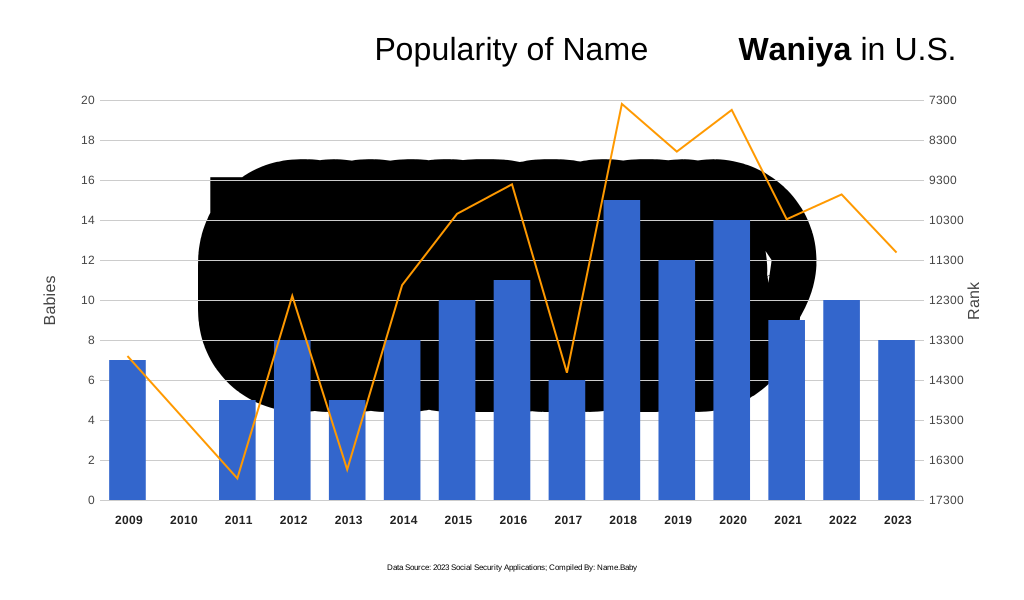
Waniya, a trisyllabic feminine appellation of probable Arabic derivation (وَانِيَة), conveys semantic fields of “desire” and “aspiration” and, by extension, an uplifting connotation of earnest intent. Phonetically rendered in English as wah-NEE-yuh (/wɑˈniːjə/), the name’s medial stress and open vowel nucleus lend it a sonorous clarity prized in Anglo-American usage. Its morphological construction—initial consonantal glide, long front vowel, and palatal glide ending—facilitates both aesthetic balance and ease of articulation. In the United States, Waniya has maintained a consistent, if modest, presence among newborn females over the past decade, registering occurrences between 5 and 15 annually and a Social Security Administration rank fluctuating narrowly around the mid-900s (2017: 6 [#953] to 2018: 15 [#942]; 2024: 11 [#939]). Such persistence at the margins of popularity underscores an analytical portrait of a name that, while seldom chosen, appeals to parents seeking a coolly distinctive yet culturally resonant identifier.
Pronunciation
English
- Pronunced as wah-NEE-yuh (/wɑˈniːjə/)
U.S. Popularity Chart
Notable People Named Waniya
| Waniya Hudson - |
