Wrangler
Meaning of Wrangler
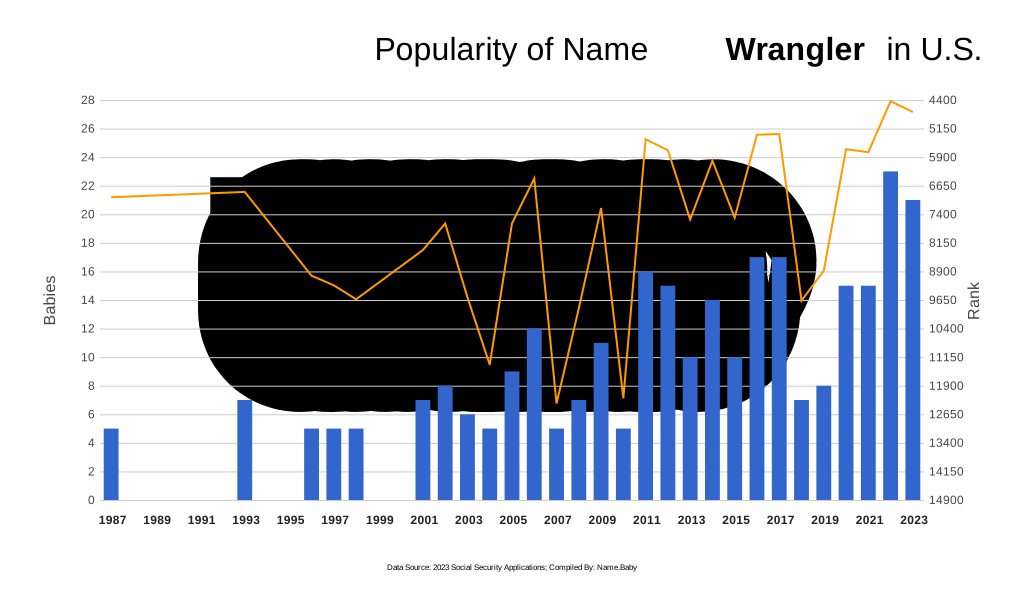
The name Wrangler, rooted in the vernacular of the Anglo-American cattle frontier, originally denoted an individual entrusted with the supervision and taming of restless herds, deriving etymologically from the Middle English wranglen, “to dispute,” and subtly echoing the Latin regnare—“to rule”—thus bestowing upon its bearer an air of gentle sovereignty over untamed domains. In the United States, Wrangler remains uncommon yet quietly ascendant, gracing thirty newborn boys in 2024 and ranking 894th nationally; its rarity resembles an unbroken stallion galloping across a windswept prairie. Figuratively, the appellation unfolds like a pastoral epic, conjuring dust-kissed horizons and the rhythmic cadence of a lariat, marrying rugged Western romanticism with the disciplined rigor of academic discourse. While it may not wrangle sibling squabbles with the same prowess that a cowboy corrals cattle, Wrangler carries a formal warmth and studious edge, emblematic of resolute independence and enduring poise.
Pronunciation
English
- Pronunced as RANG-gler (/ˈræŋgələr/)
U.S. Popularity Chart