Xi
Meaning of Xi
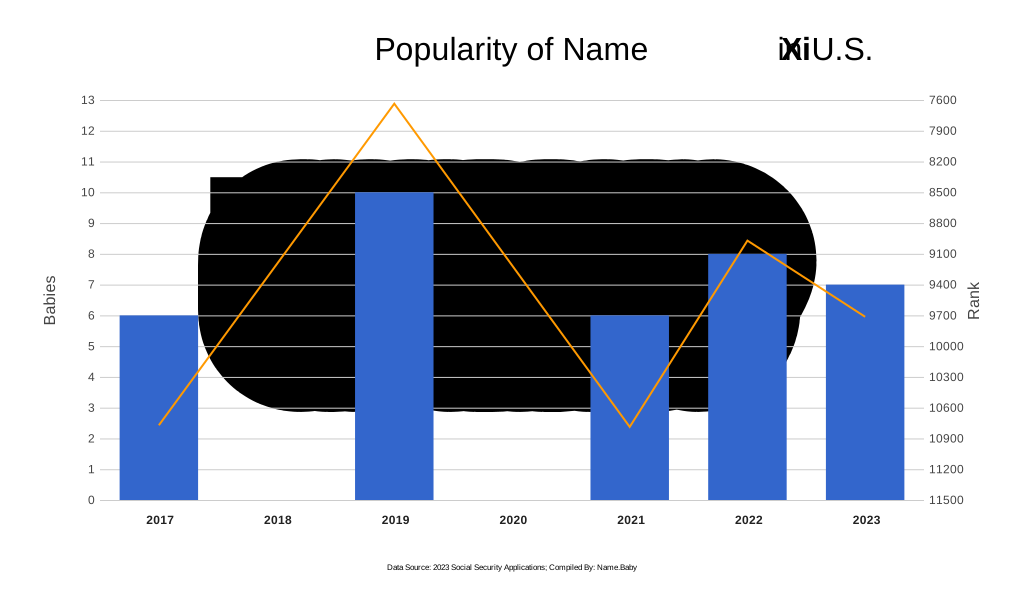
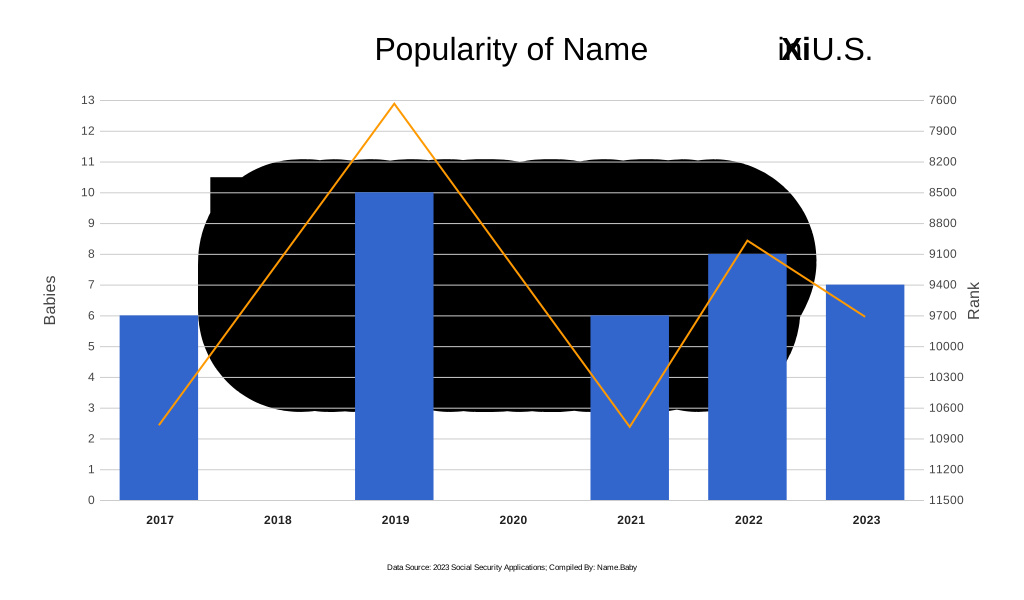
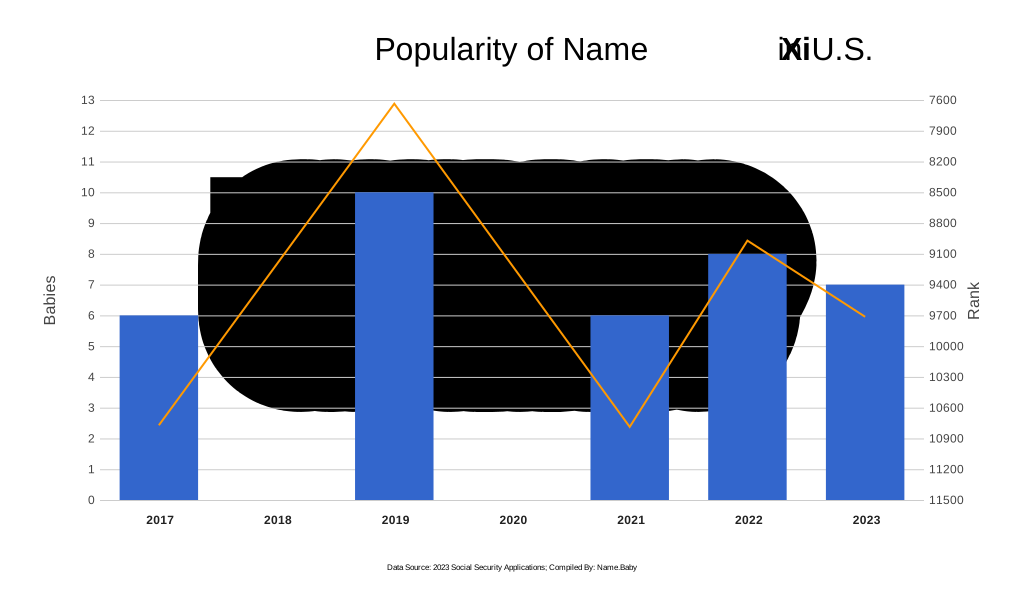
Xi, articulated in Mandarin as /ʃi/, unfolds from the venerable edifice of Chinese logography, chiefly inscribed by the characters 喜 (xǐ), connoting “joy” and collective exhilaration, and 希 (xī), denoting “hope” and the tender arc of aspiration, thereby bestowing upon its bearer a name of succinct form and expansive signification. As a unisex appellation, it harmonizes with the classical Roman ideal of aequitas, melding strength and subtlety within a single syllable. In the United States, Xi has registered a modest yet steady presence in newborn naming statistics—ranking 917th with seven occurrences in 2024, 922nd with seven in 2023, 935th with eight in 2022, 928th with six in 2021, 912th with ten in 2019, and 899th with six in 2017—underscoring its gradual integration into a globalized onomastic milieu. The sinuous strokes of the sinograph evoke the gentle undulations of a river at dawn, a metaphor for both continuity and renewal that resonates with Horace’s timeless admonition to “carpe diem.” From the epic figure of Xiang Yu to contemporary luminaries such as Xi Jinping, bearers of the name have imparted a legacy of gravitas, positioning Xi at the nexus of antiquity and modernity. In this singular phoneme lies a confluence of cultural memory and forward-looking promise, embodying the principle captured by the Latin adage Veritas temporis filia—truth, the daughter of time—thus inviting parents to endow their child with a designation both timeless and transcendent.
Pronunciation
Chinese
- Pronunced as shee (/ʃi/)
U.S. Popularity Chart
Notable People Named Xi
| Xi Jinping - |
| Xi Zhongxun - |
| Xi Mingze - |
| Xi Enting - |
