Yerick
Meaning of Yerick
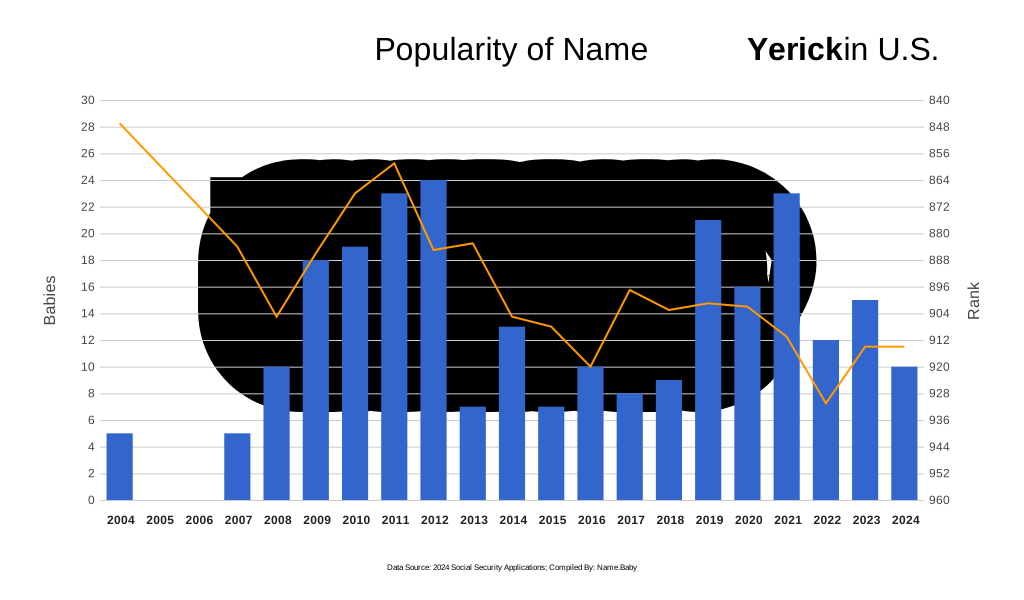
Yerick (pronounced YEHR-ik /ˈjɛrɪk/) stands as a masculine given name whose etymological lineage extends back to the Old Norse Eiríkr, a compound of ei (“ever”) and ríkr (“ruler”), thus conjuring the concept of an enduring sovereign. Yet beneath this commanding veneer lies a gentle warmth, as though the name itself were a hearth’s glow at twilight, offering both stability and solace. Through the subtle alchemy of phonetic adaptation, it has been embraced within Latin American diasporas, where the initial Y, akin to a quivering calligraphic stroke, imparts a distinctive rhythm. The name’s semantic tapestry weaves images of an unwavering lighthouse braving storm-tossed seas and, in an almost academic paradox, the precise incision of an iron stylus upon an ancient codex. Statistical data from the United States Census of Names reveals that, despite oscillating between the 859th and 931st ranks over the past twenty years and numbering merely ten occurrences in 2024, Yerick radiates an aura of cultivated scarcity. Onomastic scholars may liken its modest persistence to a stoic monument in the lexicon of personal nomenclature, while sociolinguists might wryly note that, much like a sonnet awaiting rediscovery, Yerick patiently bides its time in the limelight.
Pronunciation
English
- Pronunced as YEHR-ik (/ˈjɛrɪk/)
U.S. Popularity Chart