Yuleini
Meaning of Yuleini
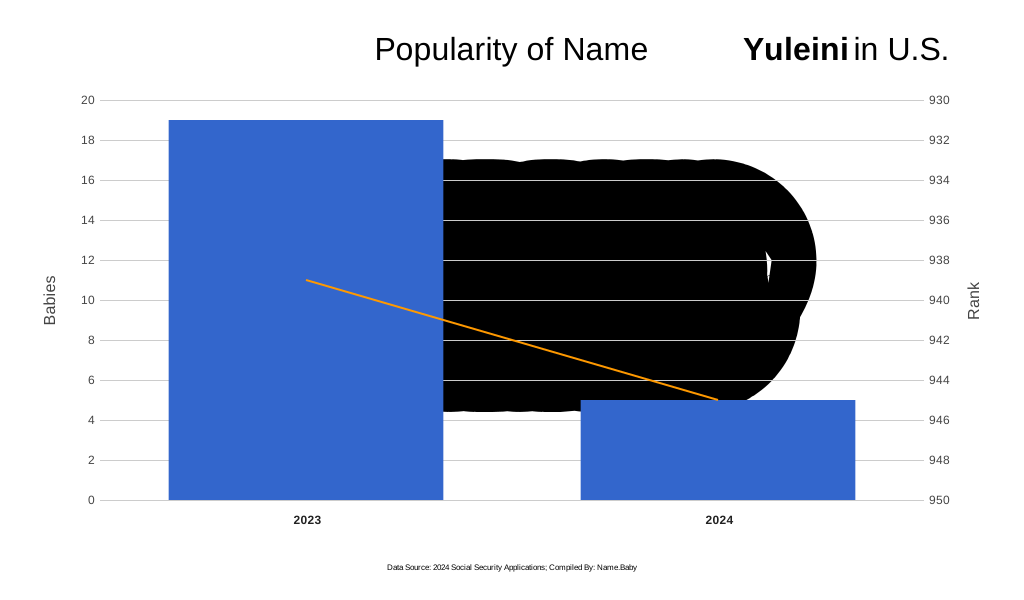
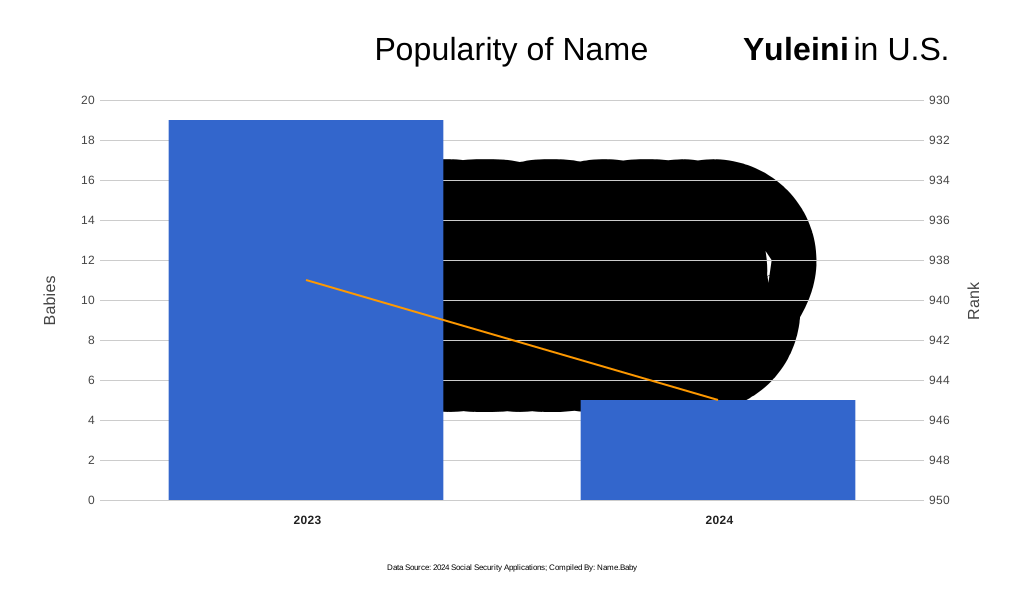
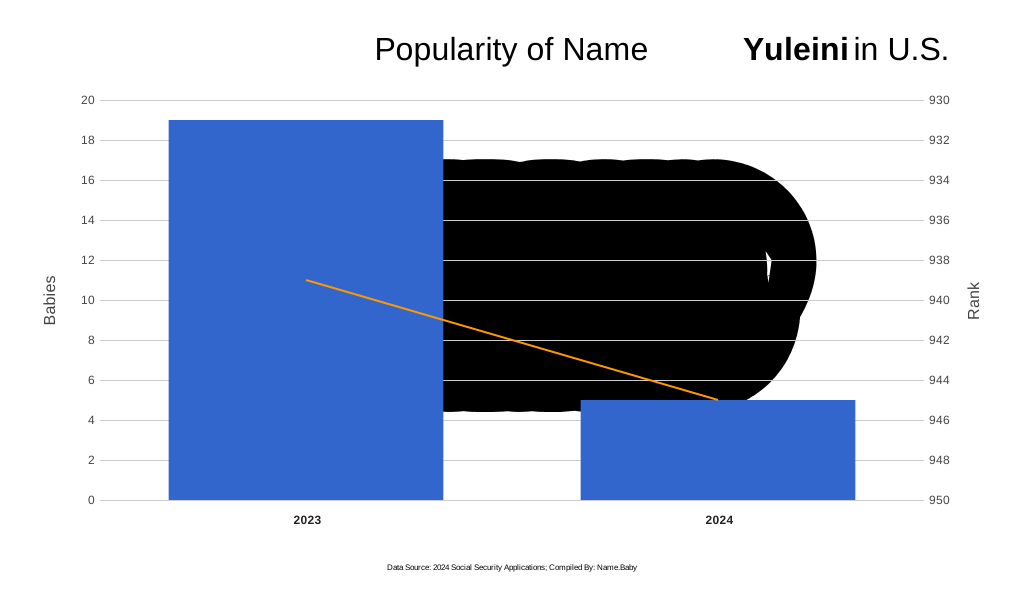
Yuleini emerges as a luminous tapestry within the contemporary Latin American onomastic landscape, its three-syllable cadence—/juːˈleɪni/—unfurling like a lantern’s glow across a velvet sky. Though it bears no attestation in classical Roman inscriptions, its morphology bespeaks a harmonious fusion of Romance-language sensibilities: the evocative root “Yule,” suggestive of light and festive renewal, conjoined with the diminutive suffix “-ini,” which in Italianate and regional Spanish usage conveys affectionate smallness. In scholarly terms, Yuleini may be viewed as a creative neologism that channels the venerable gravitas of Juliana while asserting a distinctly modern, diasporic identity. Its statistical emergence in the United States—19 recorded newborns in 2023 (rank 939), tapering to 5 in 2024 (rank 945)—attests to its rarity and artisanal charm, as though each bearer carries a bespoke nameplate against the uniformity of the census. With its warm undercurrents of renewal and its austere yet inviting phonetic profile, Yuleini stands poised to evoke both scholarly intrigue and the intimate felicity of a family’s most cherished hope.
Pronunciation
- Pronunced as yoo-LAY-nee (/juːˈleɪni/)
U.S. Popularity Chart