Yuni
Meaning of Yuni
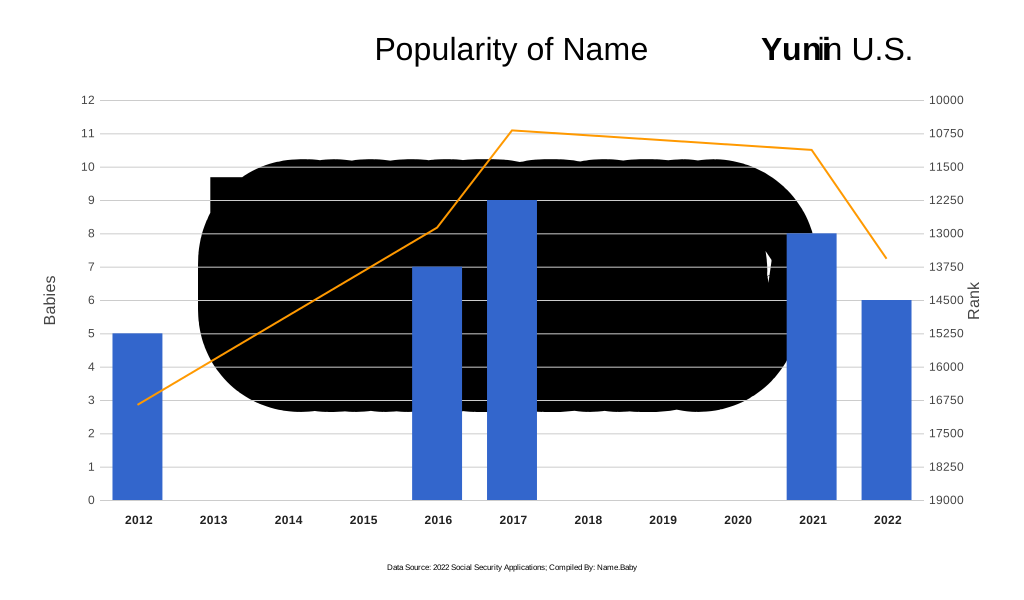
Yuni, pronounced “yoo-nee,” blossoms at the fertile crossroads of East and West: in Japanese it is frequently written 由仁, 優仁, or 悠虹, weaving kanji that evoke “reasoned benevolence,” “gentle humanity,” or even a “long, iridescent arc,” whereas in Indonesian it echoes the lilting pet form of Juni, the month of June, itself a child of the Latin Iunius and, by distant lineage, of the Roman protectress Juno. Thus, within its two crisp syllables, the name houses a miniature cosmology—reason and kindness abreast of midsummer light, an alliance of intellect and radiance that ancient scholars would have hailed as concordia discors, harmonious diversity. Although still a rare jewel in the United States—never cresting the nine-hundredth rank in recent years—its quiet ascent suggests a demographic dawn, a constellation of parents drawn to its soft phonetics, cross-cultural resonance, and the promise of warmth wrapped in erudition. Yuni therefore stands as a luminous bridge: from kanji scroll to equatorial archipelago, from Latin antiquity to contemporary nurseries, a name ready to confer upon its bearer both the serenity of early morning dew and the steadfast grace of summer’s zenith.
Pronunciation
Indonesian,Japanese
- Pronunced as yoo-nee (/ˈjuːni/)
U.S. Popularity Chart
Notable People Named Yuni
| Yuni - |
