Araceli
Meaning of Araceli
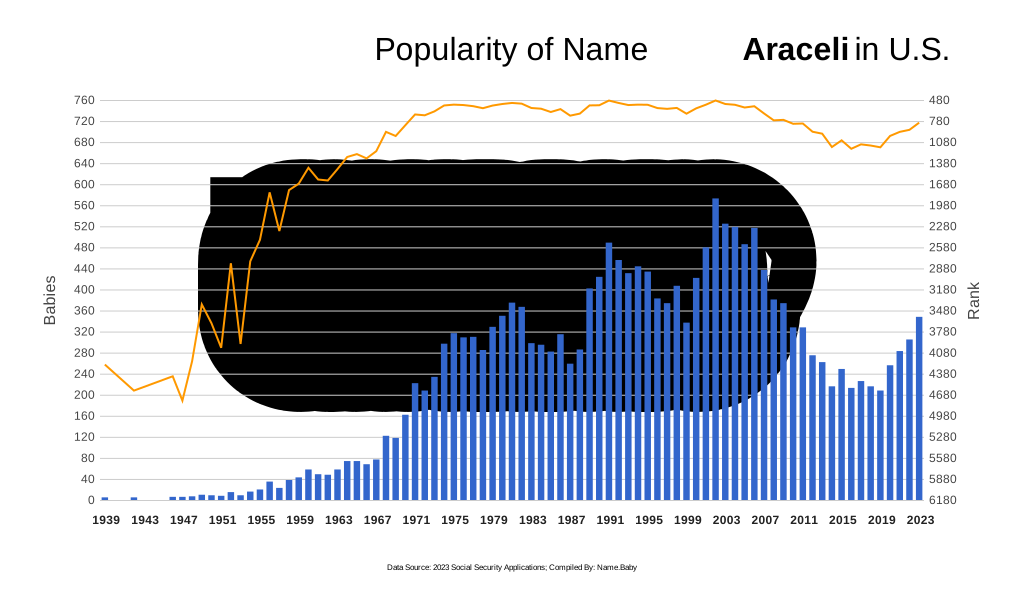
Araceli, the Spanish feminine form of a medieval Latin devotional title—Ara Caeli, “altar of heaven”—carries an explicitly celestial resonance that arose from the veneration of the Virgin Mary under the invocation Nuestra Señora de Araceli and from the Roman basilica Santa Maria in Ara Coeli; consequently, the name became a favored baptismal choice in Iberian and Hispanic communities and has maintained a quiet but persistent presence in the United States since its first measurable appearance during the early 1940s. The American statistical record, which shows an incremental ascent to a high point of rank 431 in 2002 followed by a gradual decentralization to rank 582 in the most recent 2024 figures, suggests that Araceli appeals to parents who seek an uncommonly ethereal yet approachable alternative to more familiar Marian or angelic names. Phonetically rendered in Spanish as ah-rah-SEH-lee, the name retains its lyrical cadence in English usage, thereby preserving its cultural integrity while remaining readily pronounceable to anglophone ears. With its synthesis of sacred heritage, gentle sound structure, and sustained though moderate popularity, Araceli occupies an academic interest point for onomasticians who trace how religious lexicons migrate into contemporary naming practices.
Pronunciation
Spanish
- Pronunced as ah-rah-SEH-lee (/a.ra.ˈθe.li/)
U.S. Popularity Chart
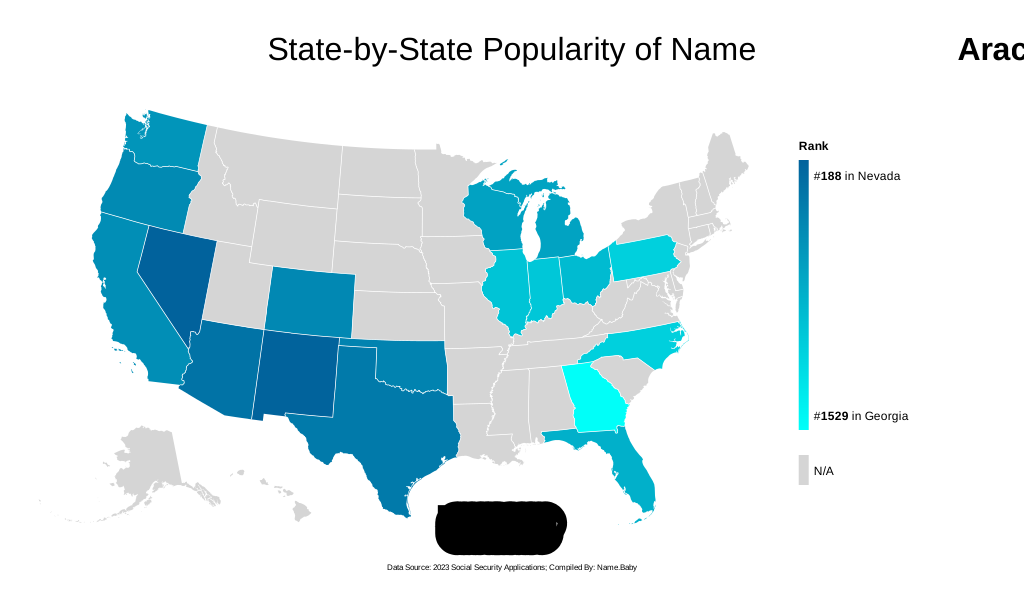
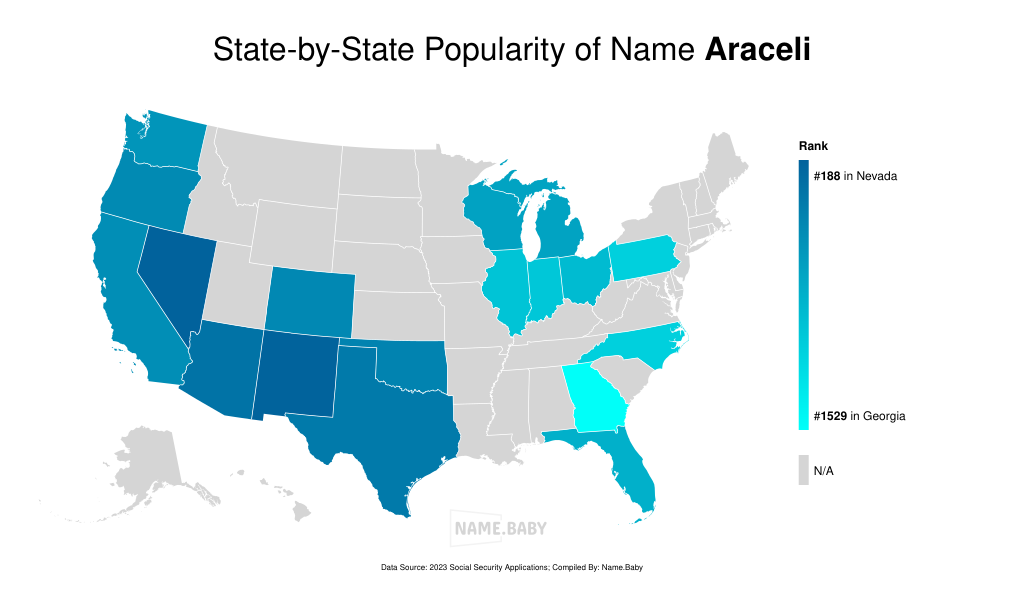
States Popularity Chart
Notable People Named Araceli
| Araceli Sánchez Urquijo was a child evacuee during the Spanish Civil War and Spain's first female civil engineer. |
| French nuclear physicist Araceli Lopez-Martens is renowned for her research on superheavy elements, including the discovery of the lightest nobelium isotope, and serves as a director of research at CNRS. |
| Araceli Edith González is an Argentine actress, fashion model, and TV host. |
| Araceli Navarro Laso is a Spanish sabre fencer who won bronze at the 2022 World Fencing Championships and competed in the 2008 Olympics. |
| Araceli Velázquez Ramírez is a Mexican Institutional Revolutionary Party politician who served as a federal deputy for Hidalgo and held local government positions. |
