Charleston
Meaning of Charleston
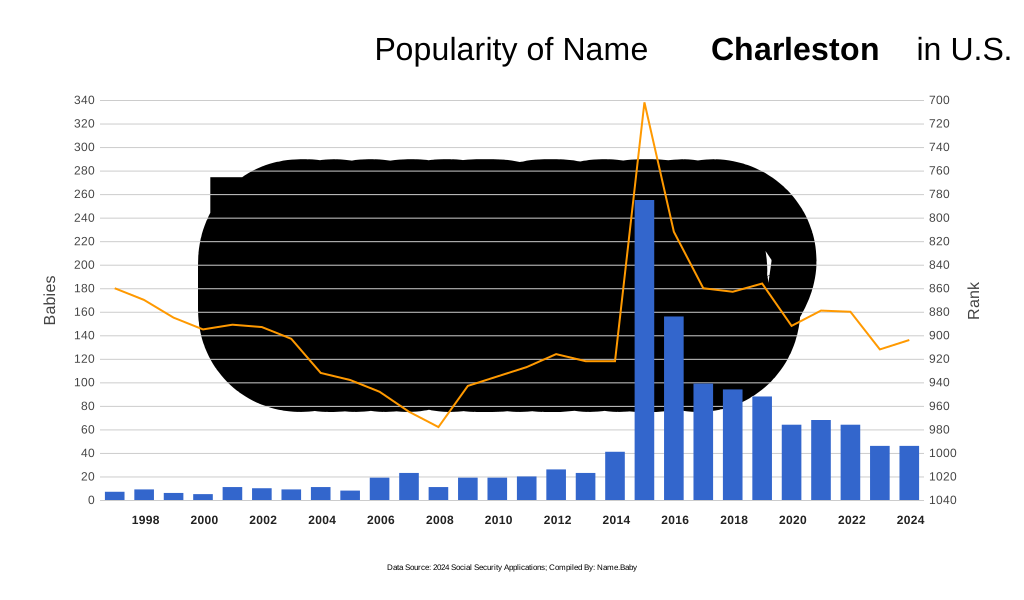
Charleston, pronounced CHARLZ-tun (/ˈtʃɑːrlz.tən/), originated as an English place-name formed from the personal name Charles—ultimately derived from the Germanic karl, “free man”—combined with the Old English element tūn, denoting an enclosed settlement; hence, its literal sense may be rendered “the town of Charles” or more broadly “free man’s settlement.” In the Anglo-American imagination it inevitably evokes the historic South Carolina port city, whose colonial grandeur, Revolutionary-era resonance, and well-preserved Georgian architecture have conferred an aura of patrician dignity on the name. Additional cultural layers arise from the exuberant 1920s dance that borrowed the city’s appellation, supplying Charleston with a hint of Jazz-Age vitality that offsets its otherwise patrician bearing. As a given name it follows the late-modern trend of transferring surnames and toponyms to the birth register, functioning comfortably as a unisex option: United States vital-statistics data show low but persistent usage, with annual occurrences fluctuating between single digits and just over 250 during the past quarter-century. Together, these historical, cultural, and linguistic strata endow Charleston with a blend of refinement, regional charm, and understated modernity that appeals to parents seeking a name both traditional in root and contemporary in application.
Pronunciation
British English
- Pronunced as CHARLZ-tun (/ˈtʃɑːlz.tən/)
American English
- Pronunced as CHARLZ-tun (/ˈtʃɑrlz.tən/)
U.S. Popularity Chart
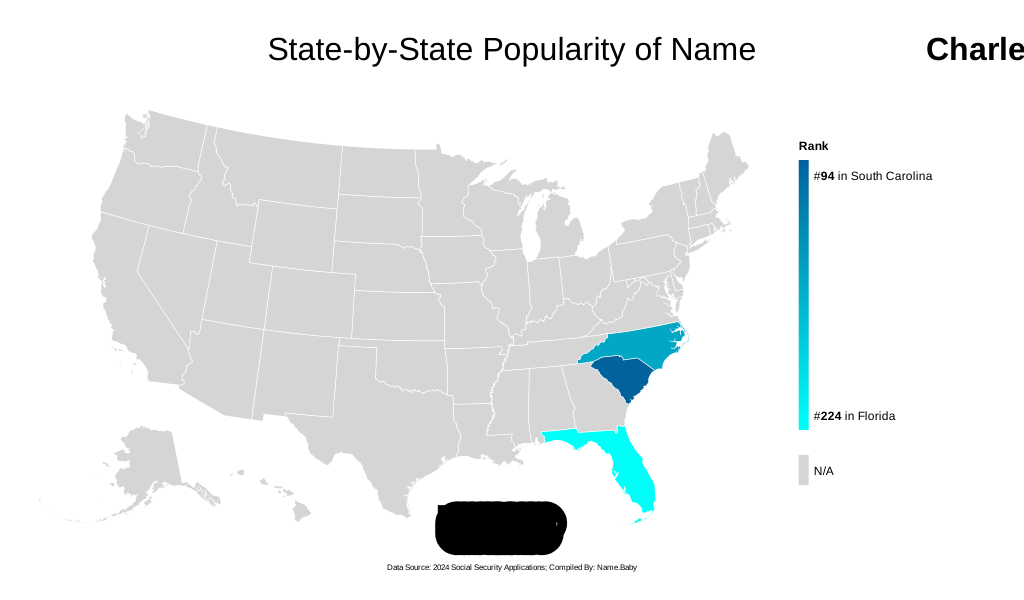
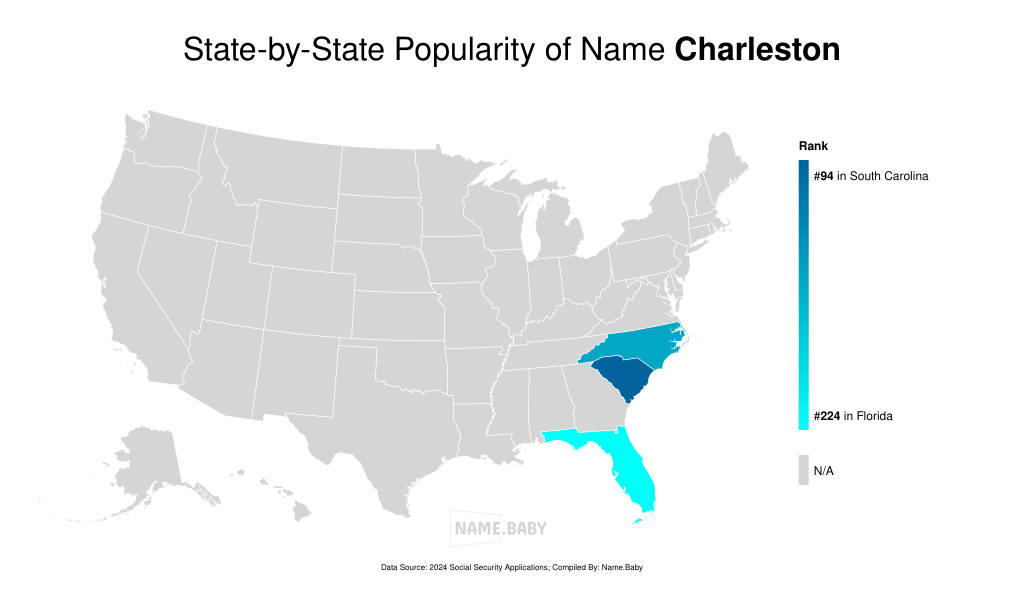
States Popularity Chart
Notable People Named Charleston
| Charleston Hughes - |
