Damain
Meaning of Damain
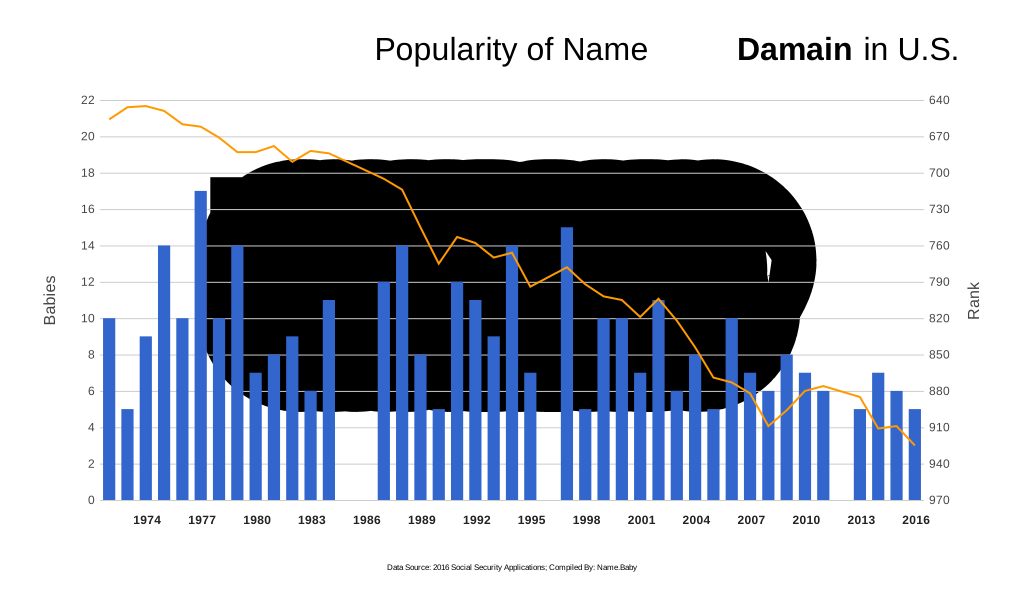
Damain, pronounced duh-MAYN, traces its roots to the ancient Greek Damianos—“the one who tames”—yet, like a well-traveled merchant on the old Silk Road, it has picked up a few linguistic souvenirs on the journey from Byzantium to modern nurseries. The name’s pedigree invokes Saints Cosmas and Damian, twin physicians revered for their healing arts, a subtle nod to steadiness and service. Statistically speaking, Damain has hovered in the lower end of the U.S. charts since the 1970s; never quite courting the spotlight, it prefers the quiet corner table, appreciating consistency over acclaim. Parents who choose this spelling often relish its sharpened “-ain” ending, a small flourish that distinguishes it from the more common Damian without slipping into extravagance. In Persian ears, the cadence of Damain can echo the measured rhythm of a santur, restrained yet resonant—a reminder that power, much like a desert cypress, is best admired when it stands calmly rooted.
Pronunciation
English
- Pronunced as duh-MAYN (/dəˈmeɪn/)
U.S. Popularity Chart