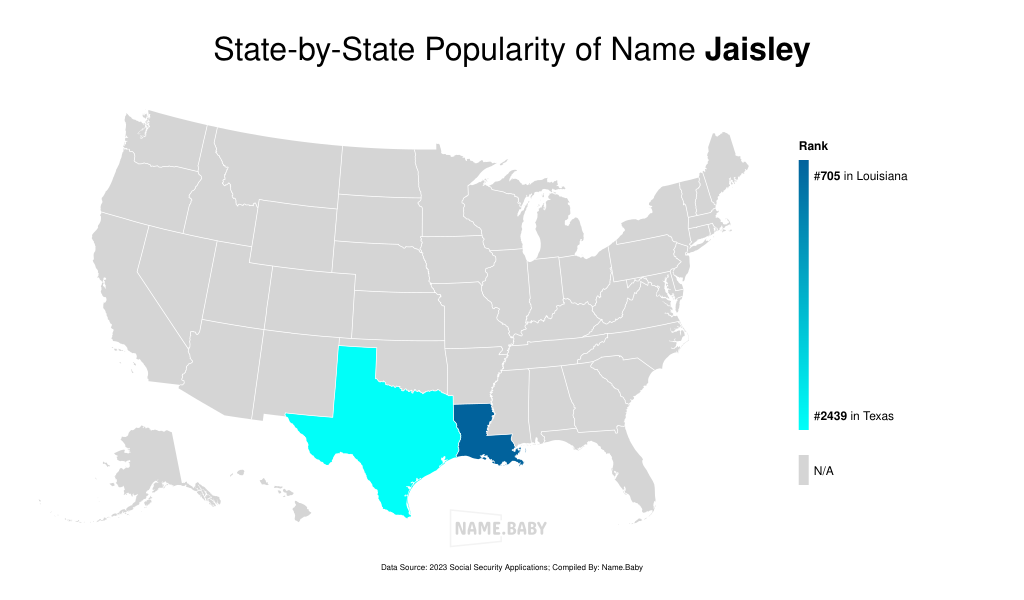
Jaisley
Meaning of Jaisley
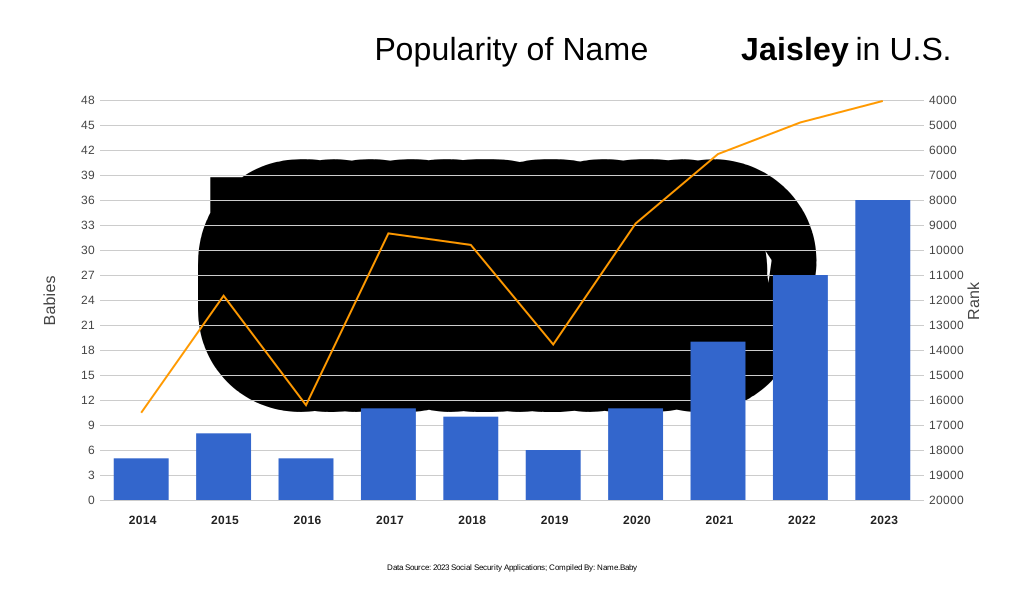
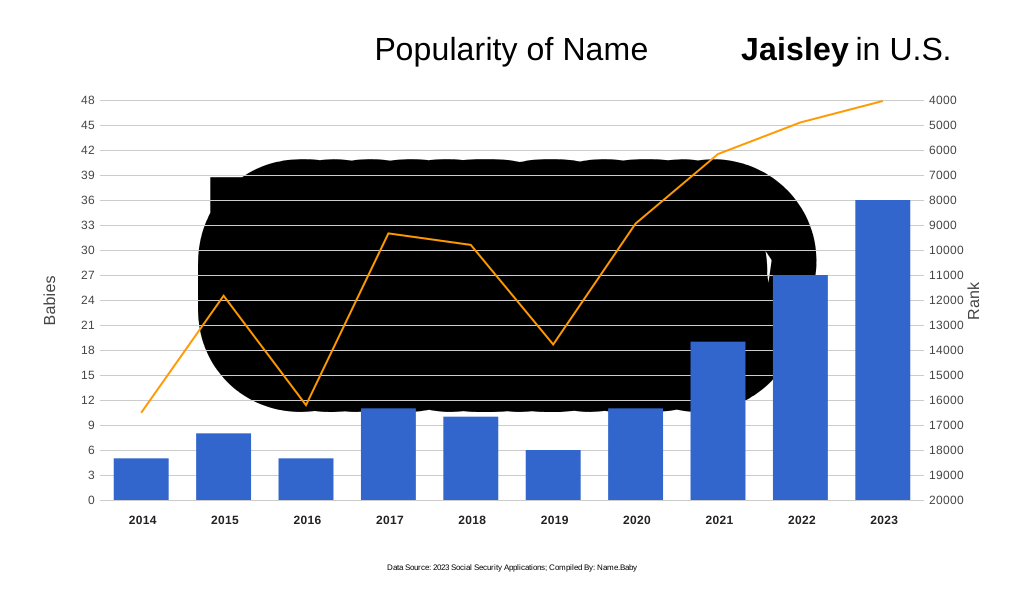
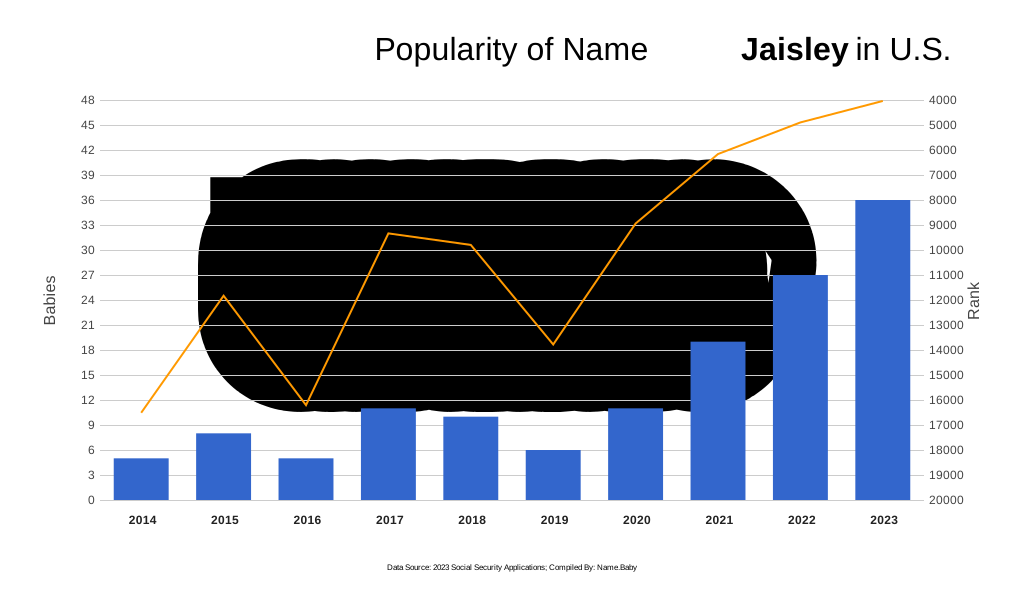
Assigned to the female sex, Jaisley, pronounced JAYZ-lee (/dʒeɪz.li/), emerges as a modern American onomastic creation that adroitly synthesizes the Germanic j-initial with the soft-lilted -sley suffix historically rooted in Scottish topography, even as it resonates with classical Latin’s predilection for liquid vowels—an elegant linguistic interplay. Its phonemic architecture, a trochaic disyllable bearing primary stress on the first element, grants it an aural clarity akin to sunlight caught in a dew-dripped lattice, while its morphological novelty bespeaks a parental yearning for both individuality and lyrical grace. In empirical terms, Jaisley’s statistical trajectory in the United States—from a modest tally of five recorded newborns in 2014 (rank 958) to a zenith of thirty-six in 2023 (rank 922) and a continued presence of twenty-nine in 2024 (rank 921)—maps a steady, if unhurried, ascent much like a young vine reaching for its first bloom. Though it has yet to unseat perennial favorites such as Emma or Olivia, Jaisley’s deliberate rise offers demographers and statisticians alike a quietly compelling dataset to ponder over espresso, endowed with the dry delight of a Latin scholar savoring a well-placed footnote.
Pronunciation
American English
- Pronunced as JAYZ-lee (/dʒeɪz.li/)
U.S. Popularity Chart
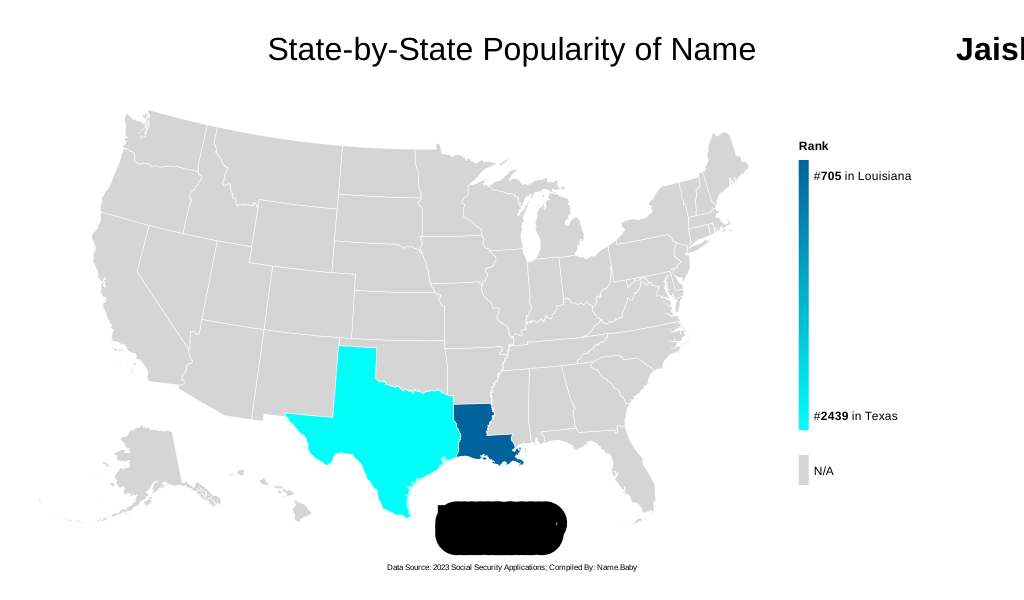
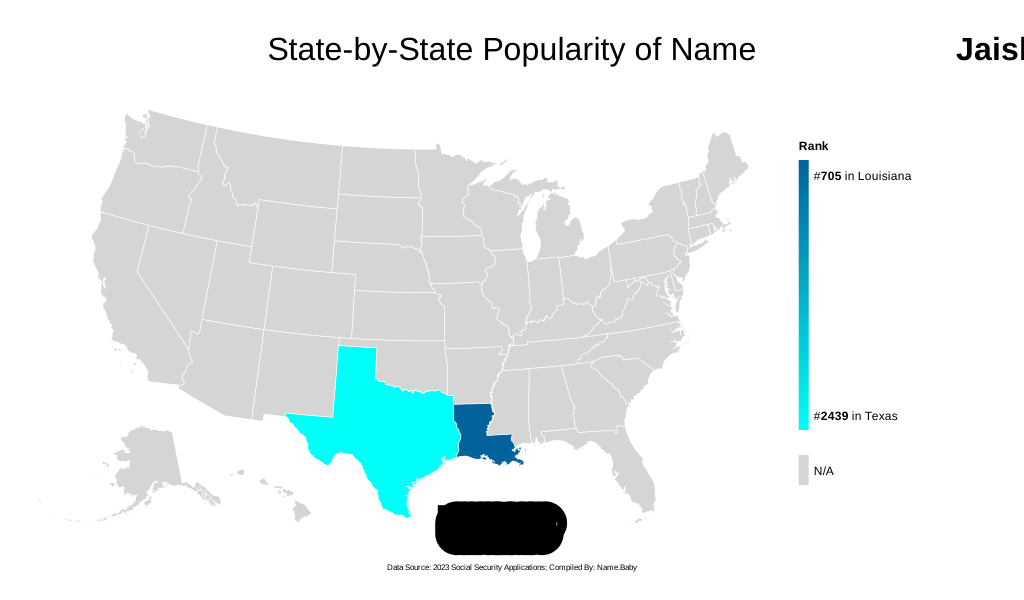
States Popularity Chart