Navada
Meaning of Navada
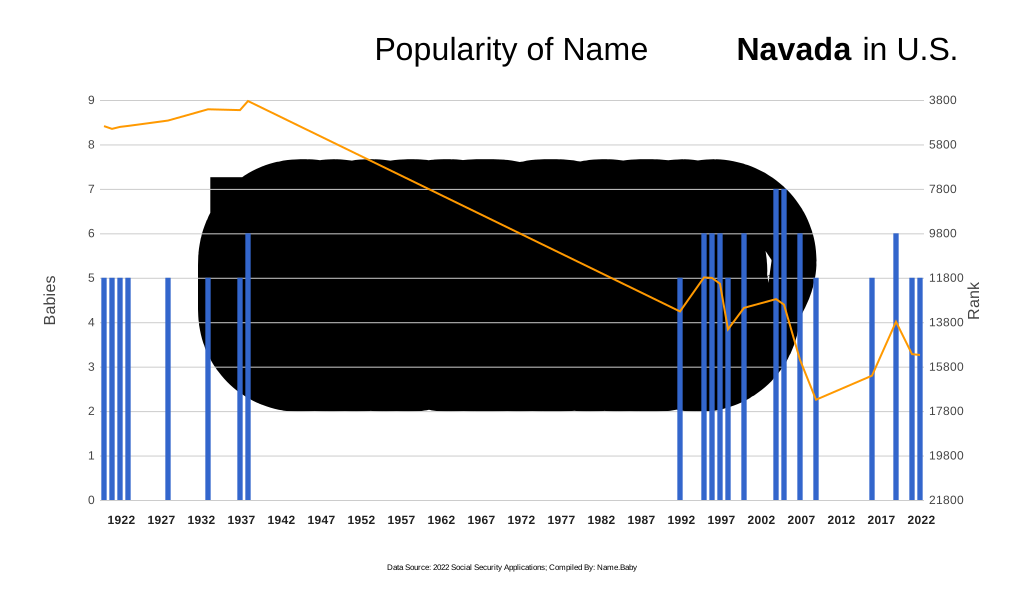
Navada, a phonetic and orthographic variant of the more familiar Nevada, traces its linguistic lineage to the Spanish adjective “nevada,” meaning “snow-covered,” a reference historically applied to mountain peaks whose perpetual white mantles commanded early explorers’ attention; by extension, the given name evokes imagery of brisk alpine air and crystalline landscapes, lending it an understated naturalistic resonance. As a modern English unisex forename—pronounced nuh-VAH-duh (/nəˈvɑːdə/)—it remains statistically rare in the United States, with annual registrations seldom exceeding single-digit figures since federal recording began in the early twentieth century and appearing intermittently on the Social Security Administration charts, most recently with five births in 2022. The spelling shift from “e” to “a” distinguishes the name aesthetically without altering its sound, aligning with contemporary naming trends that favor subtle customization while preserving recognizability. Because Navada is untethered to a singular cultural narrative, parents often adopt it for its geographical association with the American West, its quiet nod to Spanish etymology, and its gender-inclusive flexibility, making it an unobtrusive yet distinctive choice for children whose identity may traverse multiple linguistic or cultural terrains.
Pronunciation
British English
- Pronunced as nuh-VAH-duh (/nəˈvɑːdə/)
American English
- Pronunced as nuh-VAH-duh (/nəˈvɑdə/)
U.S. Popularity Chart