Wai
Meaning of Wai
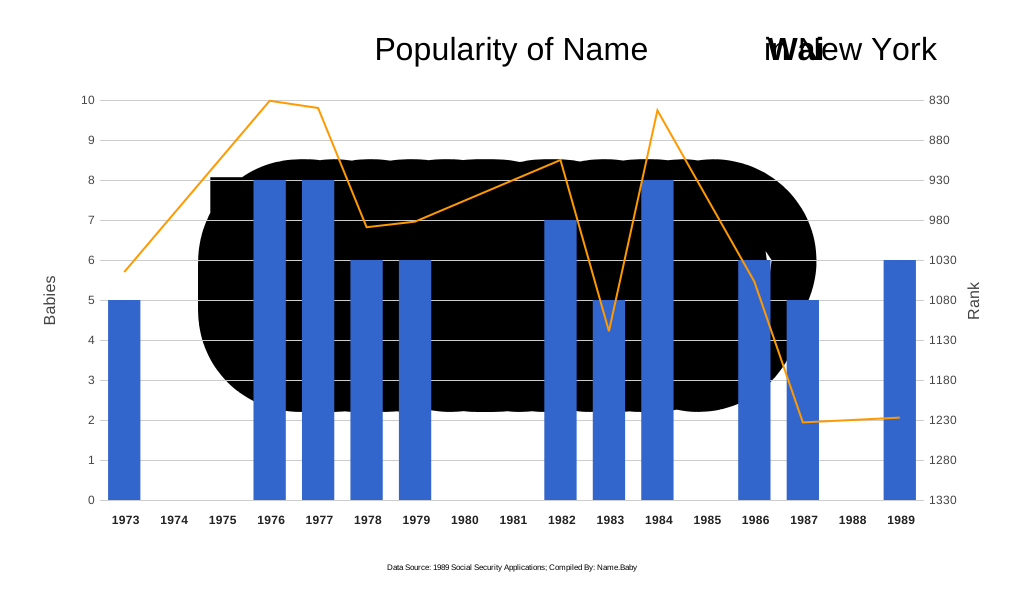
In the lexicon of Chinese onomastics, Wai emerges as a unisex appellation whose phonetic elegance belies a spectrum of semantic depths—commonly represented by characters such as 偉 (“greatness”) and 惠 (“grace”)—each rendition conjuring Confucian ideals of virtue and harmony. As a Cantonese romanization pronounced /waɪ/, it resonates with succinct clarity, much like an epigram whose brevity invites reflection. A quantitative analysis of New York birth records between 1973 and 1989 reveals Wai’s modest yet quasi perenne usage: five to eight registrations annually, with rankings oscillating in the mid-200s—from a peak of 224th place in 1976 and 1984 to a nadir of 246th in 1989—an indication of its enduring niche appeal within diasporic communities. Although Wai never vaulted into mainstream popularity, its sustained presence underscores an analytical narrative of cultural fidelity charting a delicate balance between distinctiveness and universal approachability.
Pronunciation
Chinese
- Pronunced as w-eye (/waɪ/)
U.S. Popularity Chart
Notable People Named Wai
| Wai Wai Nu - |
| Wai Wai Aung - |
| Wai Lin Aung - |
