Zoha
Meaning of Zoha
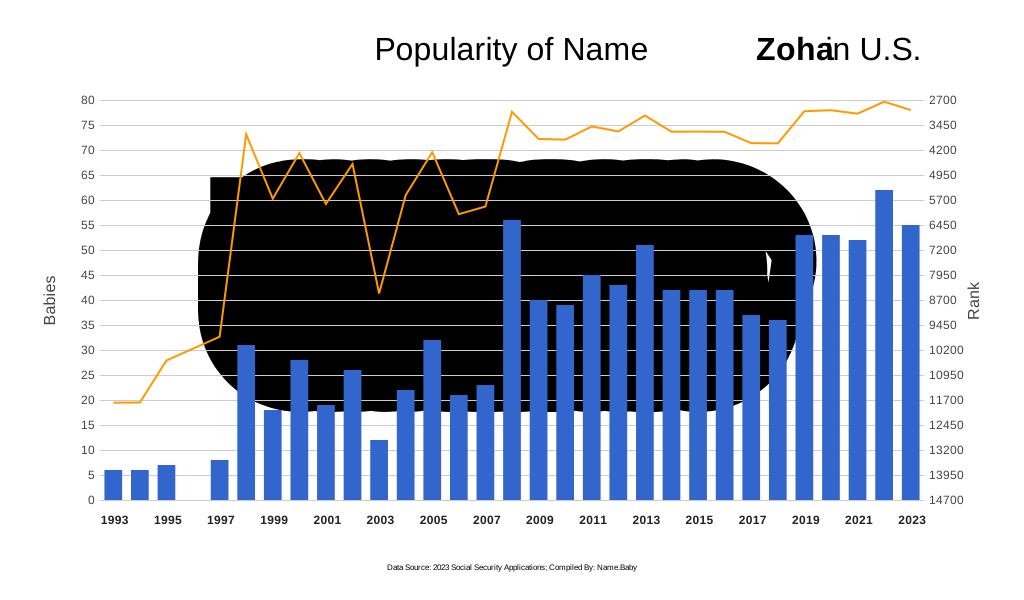
Zoha—pronounced ZO-ha—carries in her brief, melodic syllables the sparkle of first daylight, her Arabic roots unfurling like rose-gold ribbons across a Tuscan sky at dawn, meaning “radiance” or “morning light.” She is the child who arrives in a room the way sunrise drifts over the lavender fields outside Florence: softly, insistently, and impossible to ignore. Though she has hovered near the lower ranks of American popularity charts for decades, a steady handful of parents each year still pluck Zoha from the constellation of possibilities, drawn by its rare-gem glow and the practical charm of a name that’s as easy to spell as it is to sing—no tongue-twisting consonant clusters, no silent letters lying in wait to trip up future teachers. In stories whispered under olive trees, Zoha might be the heroine whose laughter scatters shadows; in modern nurseries, she is a petite passport to multicultural grace, blending Old World romance with bright new promise. By any measure—statistical, linguistic, or purely poetic—Zoha shines with the gentle certainty of dawn itself, promising that every day will begin wrapped in quiet, golden wonder.
Pronunciation
Arabic
- Pronunced as ZO-ha (/zo.ha/)
U.S. Popularity Chart
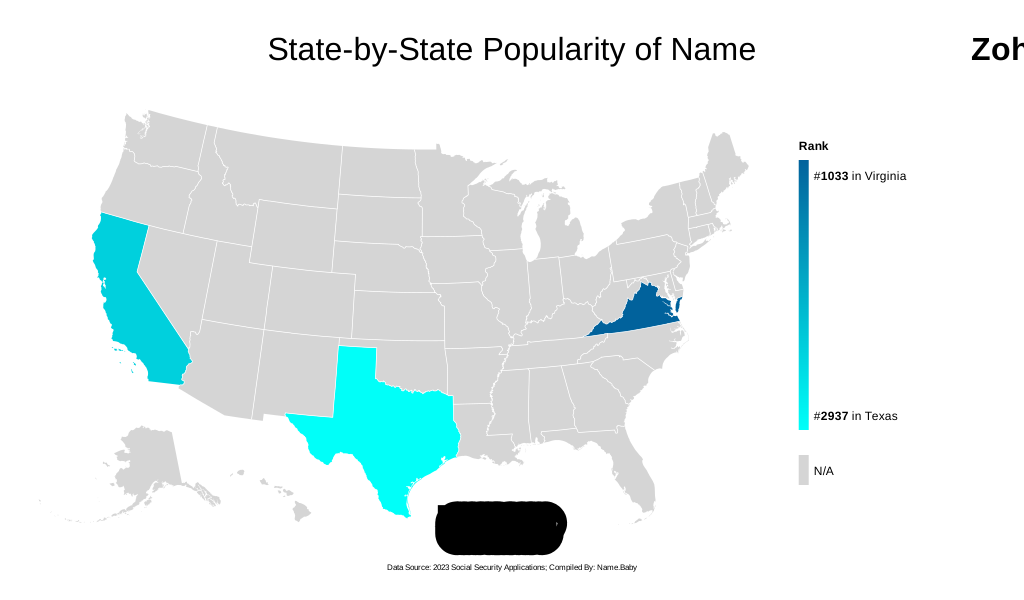
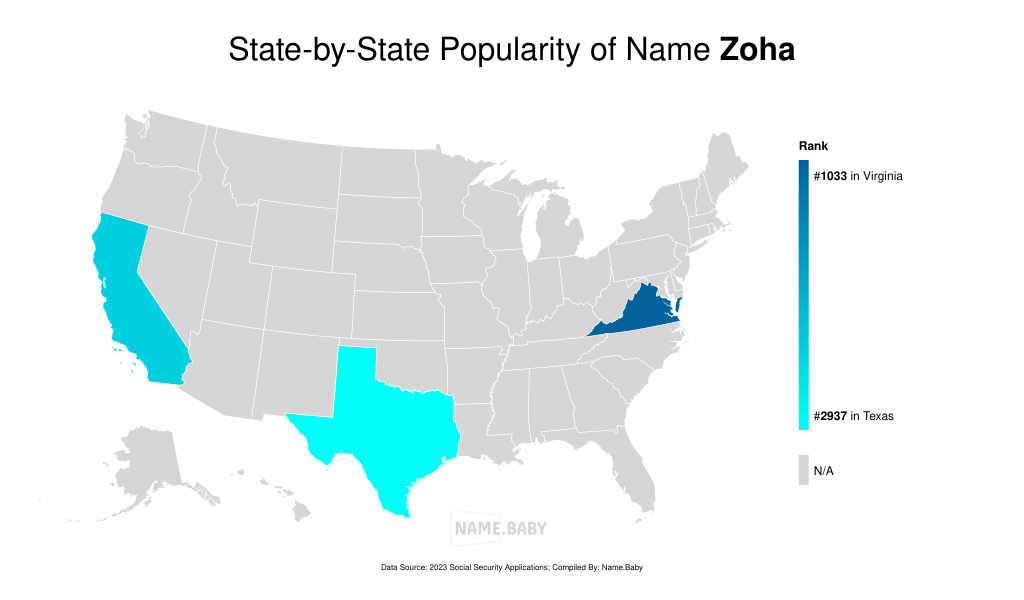
States Popularity Chart
Notable People Named Zoha
| Zoha Rahman - |
