Zohal
Meaning of Zohal
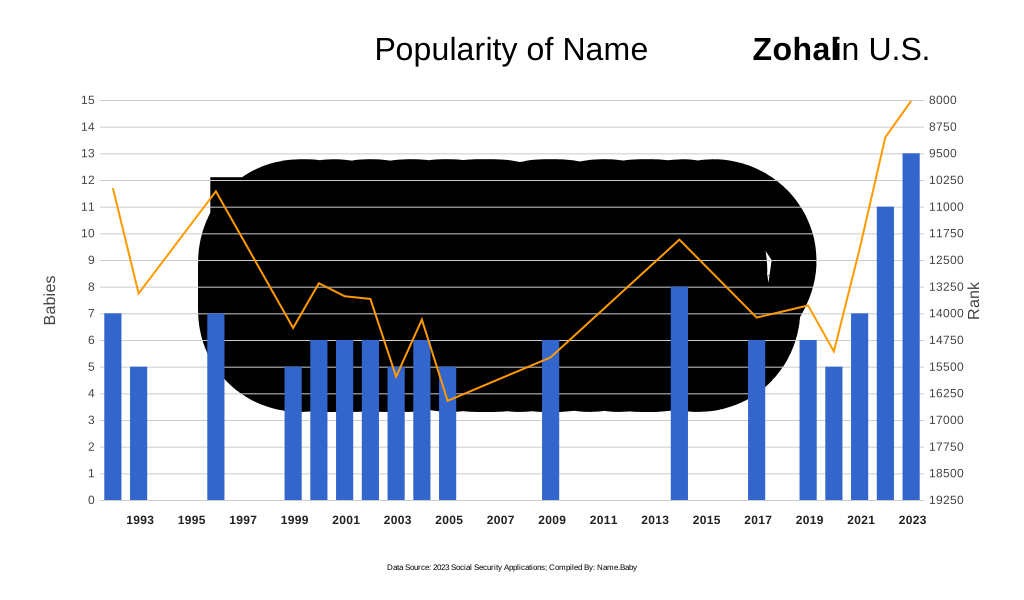
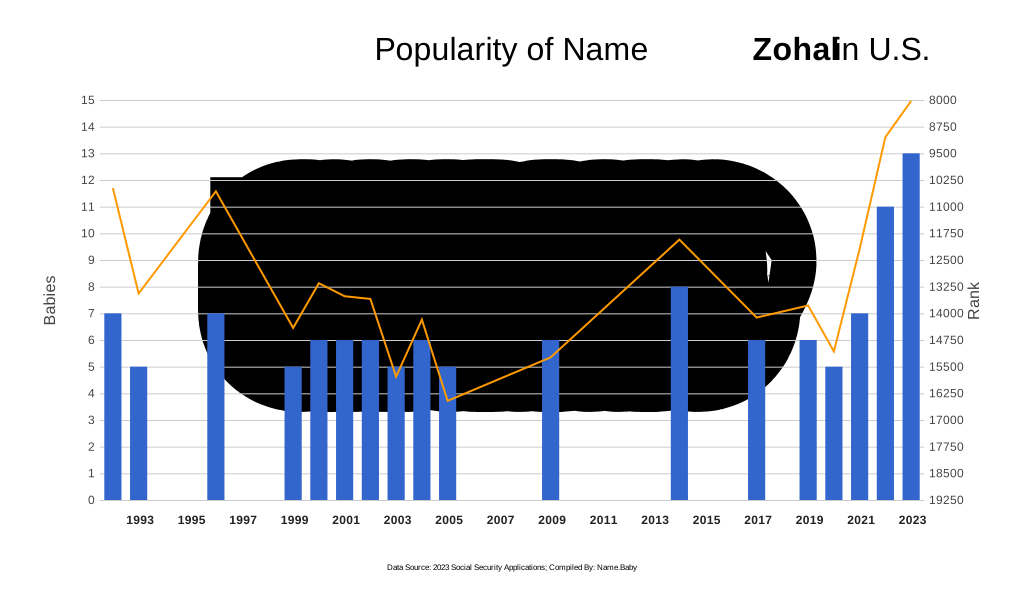
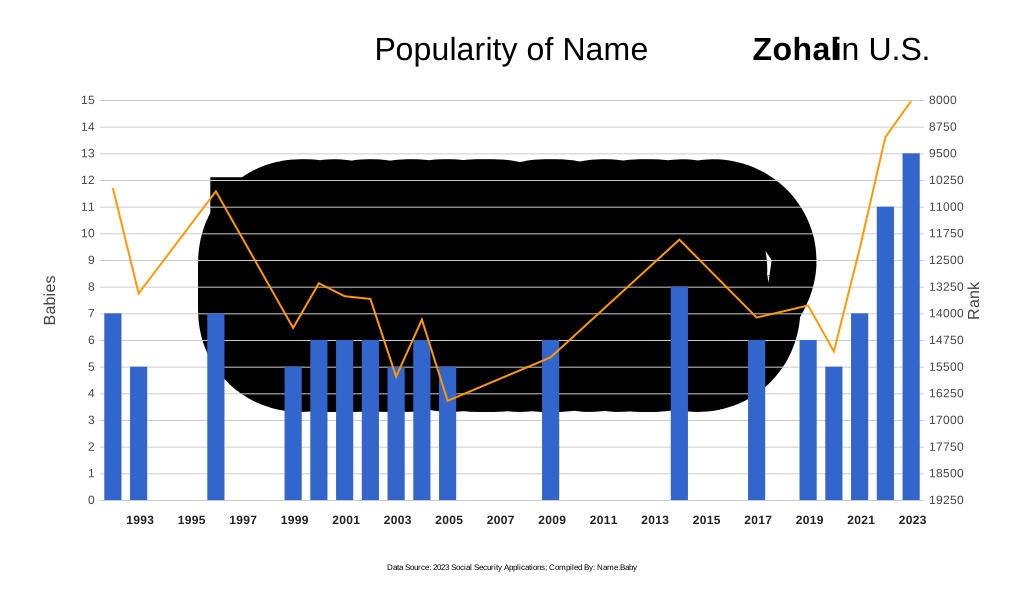
Zohal (Persian: زحل, pronounced zo-HAHL /zoːˈhɑːl/) is a feminine appellation whose provenance lies in classical Persian astronomy, where the term denotes the planet Saturn—known in Latin as Saturnus—whose patient vigil across the firmament has long symbolized the cyclical rhythms of tempus and the promise of renewal. Possessing a sonorous elegance, with its sibilant consonant and open vowel that together flow like a gentle incantation, Zohal evokes, in the mind’s eye, an alabaster orb girdled by gossamer rings, nodding to both disciplina and fertility in a cosmic ballet that echoes ancient myth and scholarly treatise alike. Linguistically, it emerges from Old Persian astrogeographical lexica preserved in medieval manuscripts, intersecting with Arabic scholastic discourse yet maintaining a distinct phonological identity that resonates with clarity and warmth. Though its appearance in North American birth registries remains modest—hovering near the 900th rank in recent years—its gradual ascendancy bespeaks a quiet renaissance, as parents drawn to names that marry academic gravitas with poetic grandeur bestow upon their daughters a moniker that inspires wonder and steadfast grace, beckoning its bearer ad astra.
Pronunciation
Persian
- Pronunced as zo-HAHL (/zoːˈhɑːl/)
U.S. Popularity Chart